


Often, I hear Greene County residents complain about our lack of amenities, declining population, limited growth, and high property taxes. And the question often asked is why Greene County, nestled between two economically thriving counties, Washington to our north and Monongalia County, WV to our south, has suffered continual decline in all measures of economic growth for decades. This is a complicated issue, but there is one major causal factor and several contributing components.
The number one issue preventing economic growth and increased diversity in Greene County is our property tax rates. We cannot entice monetary investment in businesses, industry, or residential development because our property tax rate is significantly higher than our neighboring counties. This was predicted and preventable; however, for decades Greene County leaders failed to mitigate, slow, or reverse this predicted predicament.
There are three taxing bodies in Greene County. The township or borough in which you live, the county, and your respective school district. Of your total annual property taxes, your township or borough receives about 10%, the county receives 24% and the school district consumes 66%.

Elected officials of these three bodies: Township Supervisors, County Commissioners and School Board of Directors operate independently, not hierarchically. Basically, each elected body is charged with managing their respective administrative staff to ensure they provide residents and visitors with characteristics that make a community and county desirable – public safety, housing, employment, quality of schools, responsive government and affordability.
Taxes are paid on three different assessed assets. Industrial, commercial, and residential lands are taxed at the assessment value annually. The second taxable asset is any permanent structure built on your property. This is known as the improvement value. Third, only applying to the coal mining industry is mineral value. Mineral Value (Coal) is based on a yearly report/analysis by an outside source.
The tax burden is not shared equally among asset owners. Approximately 30% of Greene County surface land and improvements are owned by tax-free or tax-reduced organizations leaving an increased tax burden on the other 70% of owners. Religious organizations, educational institutions, and hospitals are tax exempt, as well as certain nonprofit organizations.
There are also reduced taxation rates for agricultural land and state/federally owned lands. For example, the Pennsylvania Game Commission (PGC) owns more than 15,300 acres in Greene County and only pays 3% equivalent of the tax you or I would if we owned the same property. Annually, Greene County is shorted by more than $570,000 in tax revenue from the PGC alone.
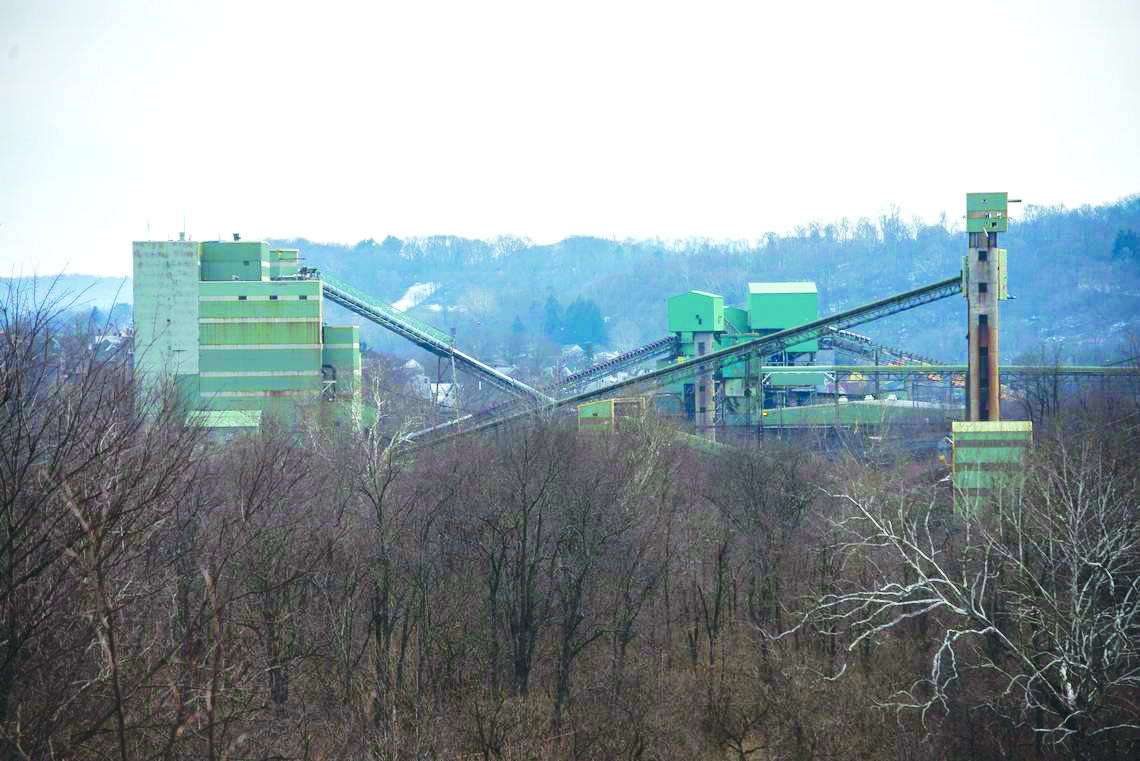
Let’s see how we got here. Historically, Greene County has been blessed with opportunity because of its natural resources. It has the largest bituminous coal reserves in the Commonwealth and, more recently, has been the fourth largest producer of natural gas in the Commonwealth. Yet, we remain the second poorest county in the state of Pennsylvania. Why?
I’m reminded of the adage, “don’t put all your eggs in one basket.” Essentially, when things were good; the population was stable, tax revenue was abundant, and the local economy was thriving, little effort was required to maintain the status quo at any level of county administration. Money solves many issues.
You can live like that for a while, but when predictions of significant risk to future economic stability are presented, government leadership must react decisively and in a timely manner. That is where Greene County failed. For decades, successive county administrations failed to respond to predicted changes in the coal industry, failed to increase economic diversity, and failed to invest in infrastructure for future growth.
We are now experiencing our predicted and a preventable predicament. As early as 1977, there were discussions among county leaders about Greene County’s non-diverse economy. We all understand that economic diversity is good for growth, sustainability and resilience of county taxable assets. Non-renewable natural resources, coal in this case, will someday be exhausted.
In 2008, Greene County was sternly criticized by an independent auditor for being too dependent on coal. At that time, the taxable value of the coal industry represented about 50% of Greene County’s taxable assets. Today, it represents about 30% and no traditional taxable assets have replaced the missing 20%. As the cost of government and education increases, incremental tax increases disproportionately affected legacy property owners.
In that same year, a well-researched Greene County Comprehensive Plan Implementation Plan was prepared for the Greene County Commissioners by Mackin Engineering and Strategy Solutions, Inc. There is little evidence that any of the recommendations were initiated and there is NO evidence that any of the recommended initiatives were successfully implemented.
Meanwhile, the predicted decline of coal reserves and reduced coal industry mineral valuation began. In 2011 there were nine coal mines operating in Greene County, today there are four.
There was an inflection point in 2012 that provided “hope” in stabilizing the declining county tax revenue with the developing unconventional natural gas industry. The Marcellus Legacy Fund was created by Act 13 to provide for the distribution of unconventional gas well impact fees to counties, municipalities and commonwealth agencies. Greene County was to benefit substantially.
Additionally in 2012 a Standard and Poor’s audit highlighted a weak economic profile; in 2014 a Housing Market Study emphasized a declining population. Lacking economic diversity, most population decline can be attributed to the reduction in coal mining activity.
By 2015, reduced tax revenue due to significantly declining coal industry taxable assets forced county administrators to balance an ever-increasing budget with ACT 13 funding and fiscal reserves. Between 2015 and 2020, more than $21 million in restricted ACT 13 funding was committed to the general budget. There are thirteen approved categories in which to invest ACT 13 funding, balancing the budget is NOT one of those categories. Additionally, the $4.7 million reserve fund balance was nearly depleted during the same timeframe.
By 2019, although the county had not raised taxes in a decade, it had spent every ”nickel” it had and then some. Reserve funding was depleted, and against restrictions, every dollar of annual ACT 13 funding was being rolled into the general fund. In 2021, the county was forced to raise property taxes for the first time in a decade simply because it ran out of available money.
This predicament was not caused overnight, or over the last decade for that matter. The time to act was twenty to forty years ago. Elected leaders were adequately warned and failed to act. Stay tuned next month and we will explore future opportunities for economic development in Greene County.
Read Part II of this Article Here: https://staging.greenescenemagazine.com/towne-square-part-ii-greene-countys-predicted-preventable-economic-crisis/











It’s also because there is no infrastructure in the outlying areas of waynesburg. Dunkard township needs sewage terribly. No new home here because of the expensive on lot systems. The twp or county offers any type of financial support to install these systems…if you can even get one approved
Well we are partially at fault as voters for not changing leadership to improve our government agencies, we let it go and kept repeating failed leadership and policies, we have those who held office for decades to continue to control our government and economy. Shame on us, we need to get rid of the Commonwealth well known fact this is one of the biggest reasons we are so highly taxed. STAND UP GREENE COUNTY THE TIME FOR CHANGE IS NOW . THE TIME FOR TERM LIMITS IS OVERDUE. WE NEED NEW LEADERS AND POLICIES IF WE WANT TO MOVE FORWARD.
Great article!!
Greene county taxes are outrageous and to expensive for young new
Owners to try to start their life. Something needs done. Best bet is to move right over the WV state line.