


For those of you old enough to recognize the title of this article as a reference to an Allman Brothers song, you probably remember the days when live bands were part of the social landscape of the county.
Almost everyone who grew up in Greene County has a memory of their favorite local band. Whether they played at your prom or at your favorite watering hole, those images and sounds are indelibly etched in your memory.
In the 1960s, kids put together a group in their garage and brought live music to high school dances, roadhouses and battles of the bands. I can remember my father hating the thumping sounds that emanated from our neighbor’s house thanks to a 15-year-old Jim Morrison wannabe. (Today, that teenager is a highly respected preacher around the county)
Many of a certain age can remember fire hall wedding staples like Stush and the Boys, the Shufflers, and later Colony. Such bands were de rigueur for a successful reception. Groups such as The Harding Brothers, Toiz, The Yankee Band, Wheatfield Circus, Empire, and Frog Lodge drew large crowds when their name appeared on the illuminated marquee in front of a local fire hall, Stoney Point, the Jury Box, Good Times, Alberts, Koci’s, or Koratich’s Golden Rail.
There are still vestiges of those types of bands that command attention for a Saturday night on the town. More recent bands such as Quick Exit, The Shadow Cats, The Projects, and Ruff Creek have/had loyal followings and enjoyed long-term success.
In the past, our strong local music scene created a sense of pride and identity when performers such as Gary and Jay Van Syhoc, Danny Greco, Dave Pahanish, Brynn Marie Cirota, and Robin Lee Smith achieved regional and national acclaim.
Today, one often hears people, including myself, lament the loss of those days from a musical standpoint. However, despite the fact venues where budding musicians can develop their artistic chops are becoming as rare as Pittsburgh Pirate victories, there is hope for a musical renaissance. Slowly, local artists and entrepreneurs are building a different type of music scene.
One of the few dedicated music venues remaining today is the Waynesburg Lions Club Sounds of Summer program on Tuesday evenings. According to club member Eleanor Chapman, “Our series has grown by leaps and bounds over the past nine years. The music is free, and the concession prices are reasonable.” In addition, she feels the variety of different types of music adds to the popularity of the concerts.
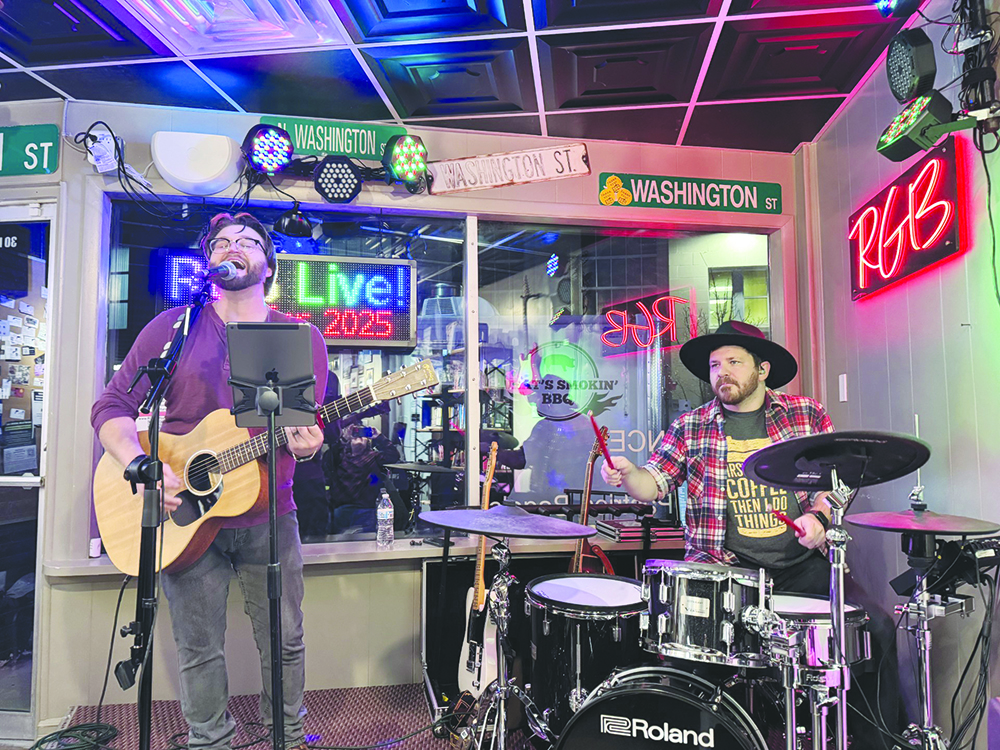
However, there are fewer and fewer places for young performers to get a chance to gain experience. Ben McMillan, owner of RGB Coffee in Waynesburg, is attempting to remedy that situation. On Friday nights, local musicians provide atmosphere for customers enjoying popular food trucks at RGB. In addition, the shop hosts open-mic nights. “We are trying to stick to local talent,” said McMillan. “We want to be part of building a unique music scene in the area.”
According to Kent Marisa, co-owner of the Denny House, “Our embracing the local music scene was a happy accident. We were approached by a couple of musicians about playing on Thursday nights. It didn’t take us long to realize there is a lot of talent around the area. We have been thrilled to discover what it adds to the evening’s atmosphere. Our crowds seem to really enjoy it.”
While the number of venues may be fewer, many musicians choose to look on the positive side of the changes. Timm Reeves, who has been playing publicly since the mid-80s, says the hours and conditions of today’s venues are far better than the smokey, late nights in the honky-tonks of his youth. “We would get home at 4:00 or 5:00 a.m. and need to take a shower and put our clothes in the washer before we went to bed. Most places today are non-smoking and close by 11p.m. Also, the equipment is so much smaller set-up and tear down time is less than half of what it was.”

Lucien Schroyer, owner of LPS Guitar, has spanned the time periods from the “good old” days to the current scene. “For the past 15 years, I have made it a point to provide young musicians with opportunities to play in front of live audiences by holding open mic nights at places that previously didn’t have live music. As a young musician growing up in the 90s, there were a lot of places to play, but I didn’t have connections. Now that I do, I try to help the people coming up today.”
One of those open mic venues is at the RGB Coffee Shop. Matthew Stewart of Soldiers and Sons is thrilled to have such a venue. “We enjoy playing at RGB because people are there to hear and appreciate live music. It’s not just about socializing where there happens to be a band playing in the background.”
Obviously, the genre of music is a factor for many. Moreover, some people want to sit passively and enjoy the lyrics and artistry of the songwriters and performers, while some want to get up and dance.
Either way, live music can foster a sense of belonging and bring people together regardless of background. The spontaneity and energy of live music offer an immersive and unforgettable experience that cannot be replicated by recorded music.
In the end, nurturing a vibrant local live music scene is crucial for community building and fostering artistic growth. If done correctly, it can even promote economic vitality in the hospitality and restaurant sectors. Finally, from a cultural perspective it can offer a unique and enriching experience that transcends mere entertainment.











Thank you Bret for mentioning my Brother Jay and me in your article ( even though you misspelled our name Van Scyoc) the Shufflers started at the Eagles Hall on Main street! In 1963! Currentlly I am appearing in the Imax movie “One To One” John and Yoko. If you would like to interview me, please do so my contacting me at vanscyoc@ptd.net and we can set it up! Thx again . Gary Van Scyoc John and Yoko‘s plastic Ono elephants memory band.