


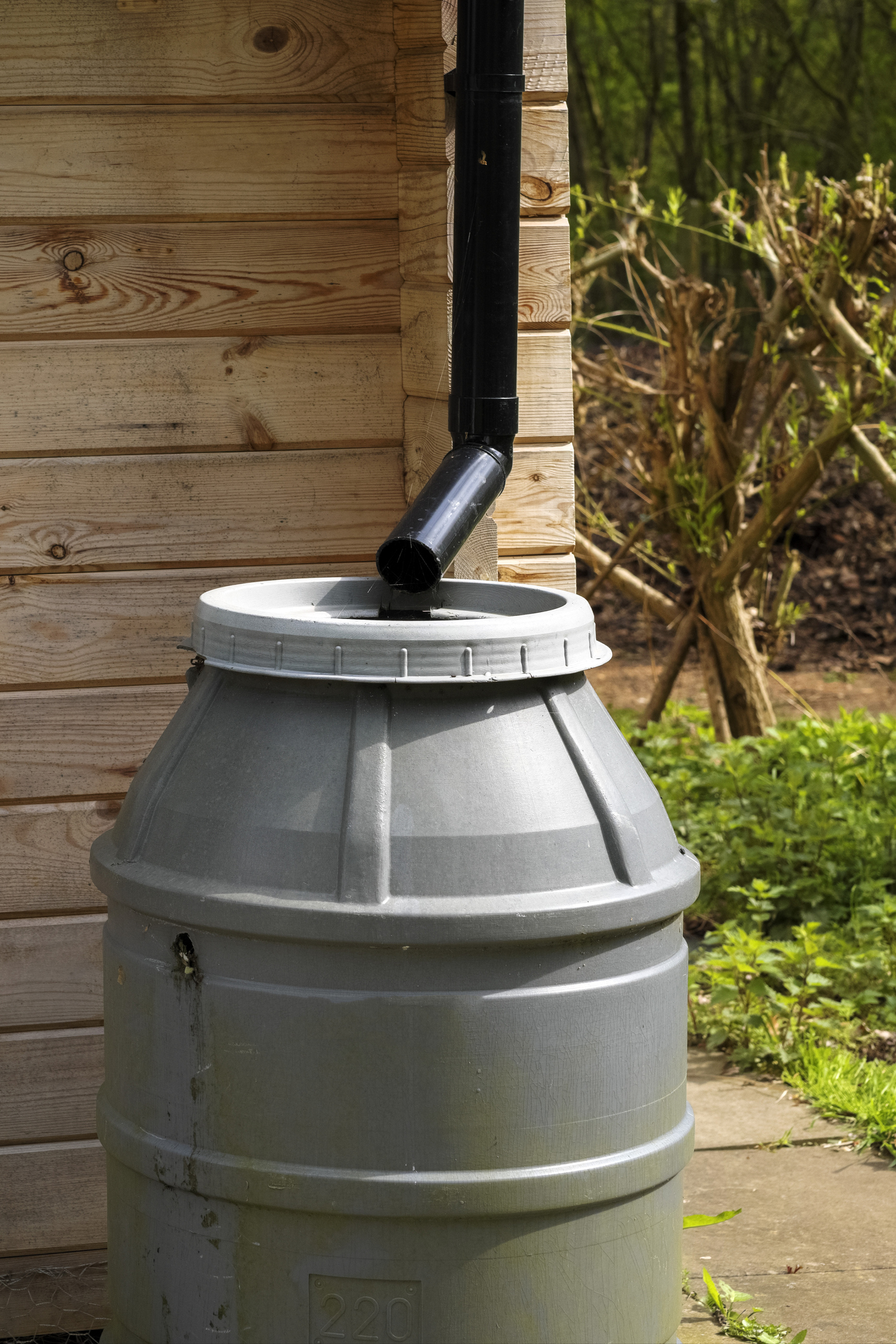
Collecting rainwater has many benefits – some obvious and others less so.
One of the most obvious benefits is saving money on your water bill. During the summer, people begin to do more seasonal activities – cleaning up their homes, planting and growing, watering the lawn, and cleaning cars, just to name a few. Lawn and garden irrigation accounts for up to 40% of residential water usage during the growing season. Utilizing rain barrels to provide water for outdoor watering tasks can save homeowners approximately 1,300 gallons of water each summer. And your water supply gets replenished every time it rains for no extra cost.
In addition to saving money, rain barrels also assist in water conservation and lighten the reliance and strain on municipal or well water. During times of plenty, water can be collected and stored for use during droughts or watering restrictions. A half-inch of rain can fill a 50- to 55-gallon rain barrel (Southwest Florida Water Management District). Depending on the size of your house/roof, rain barrels can collect a substantial amount of water. An average rainfall of one inch within 24 hours can produce more that 700 gallons of water!

Rain barrels can also assist in the prevention of runoff vulnerabilities. As rainwater falls from the sky and onto ground surfaces, it begins to collect on hard surfaces, such as concrete, metal, asphalt, and even compact soil. This begins to flow into runoff. As the runoff increases and travels, it begins to collect contaminants such as debris, fertilizers, pesticides, and other chemicals. The runoff carries these contaminants into local waterways. These contaminants pollute local water sources and can lead to increased algae growth and bacteria, and dangerous wildlife habitat alterations. Collecting runoff before it reaches the ground also helps with soil erosion. Erosion can damage foundation, remove topsoil from your garden, and damage your landscaping.
Rainwater is healthier for both your plants and soil. It is free of the chemicals often found in tap water like fluoride, calcium, chlorine, lime, salts, and inorganic ions, and it is highly oxygenated. Rainwater is the healthiest choice for your indoor and outdoor potted plants and gardens. And water collected in rain barrels doesn’t need to be used strictly for your garden. While it isn’t safe for human consumption, it can be used for a multitude of outside household chores. Collected rainwater can be used to clean vehicles, wash windows or houses, clean decks and patios, and other tasks. Because it’s soft water and free of added chemicals, it’s especially useful for washing vehicles and windows without causing damage.
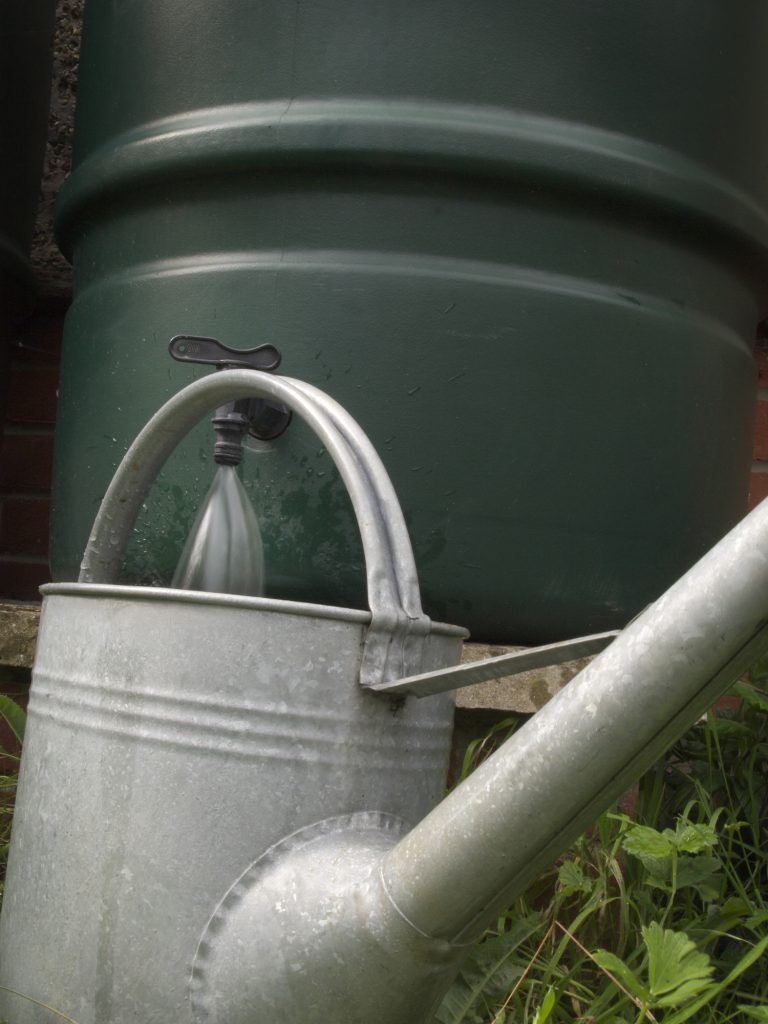
Before creating and installing your rain barrel(s), consider your water needs. How will you use the rainwater? How much water will you need to collect? How will you handle overflow? How many rain barrels do you need? Where are the best spots for the rain barrel(s)? Are you going to build or buy? Rain barrels can be purchased or home-made. In our area, the Greene County Conservation District holds annual rain barrel workshops, if you are interested in building your own rain barrel.
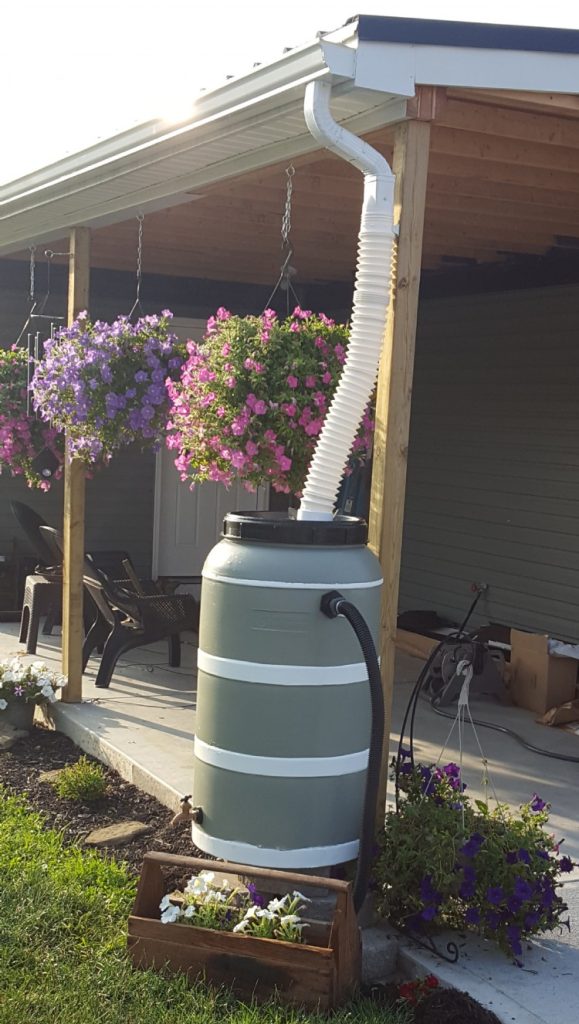
Once you’ve figured out the answers to these questions, you can begin the installation. You’ll need to level the area where your barrel will be placed, and then place a sturdy, stable base made from blocks, stones, wood, cement, or bricks. Elevate the barrel enough to provide room to fill watering cans or buckets and attach a hose. Once it is in place, you’ll need to connect a downspout, so that rain from your roof can travel into the barrel. If you don’t have gutters or an available downspout, a chain can be hung that allows water to travel its length and flow into the barrel.
Make sure you have a plan in place to handle your overflow. Overflow can be directed into a space in your yard – at least ten feet from your foundation, sidewalk, patio, or driveway, and five feet from a property line. Multiple rain barrels can be connected to handle overflow or collect more water.
If you’d like to add a little personality to your rain barrel, the exterior can be decorated with paints. Lightly rough up the surface for better paint adhesion, and paint. If using acrylics for artwork, make sure to seal with topcoat.
Because rainwater is collected from your roof – and roofs are frequently built from asphalt shingles treated with chemicals to prevent moss and algae and a resting place for many animal friends – there is concern that rainwater may not be safe for edible plants. Although data is still limited, studies have been done that have shown that rainwater appears to be safe for most edibles. To reduce potential risk, some basic precautions should be taken.
Water collected from roofs with wood-shake shingles, asbestos, zinc strips, chemicals treatments, and copper should not be used on edible plants. Heavy rains after a dry spell can wash away accumulated roof pollutants; dump this first collection or divert it straight to the ground. Avoid pouring water directly on edible plants. Instead, water the soil around them. As the water travels through the soil, it will be purified by the dirt and microorganisms. Treating your rain barrel with bleach can also kill bacteria. Adding one ounce of unscented chlorine bleach to 55 gallons of water will help kill bacteria; wait at least 24 hours before applying to your garden.
Maintaining a clean rain barrel, free of debris and sediment is important. Although rain barrels are low maintenance, they should be checked regularly for buildup of debris and to ensure openings are flowing freely. After each rain, check the barrel to determine how soon it needs to be emptied. You can empty it between storms or after it is full. Check the screen and make sure it is free of debris. It can be cleaned with a soft brush, as needed. Clean the inside of the barrel periodically. This can be done with a bleach water mix. In addition to keeping the barrel clean, make sure that your gutters and the downspout are clean and free of debris.
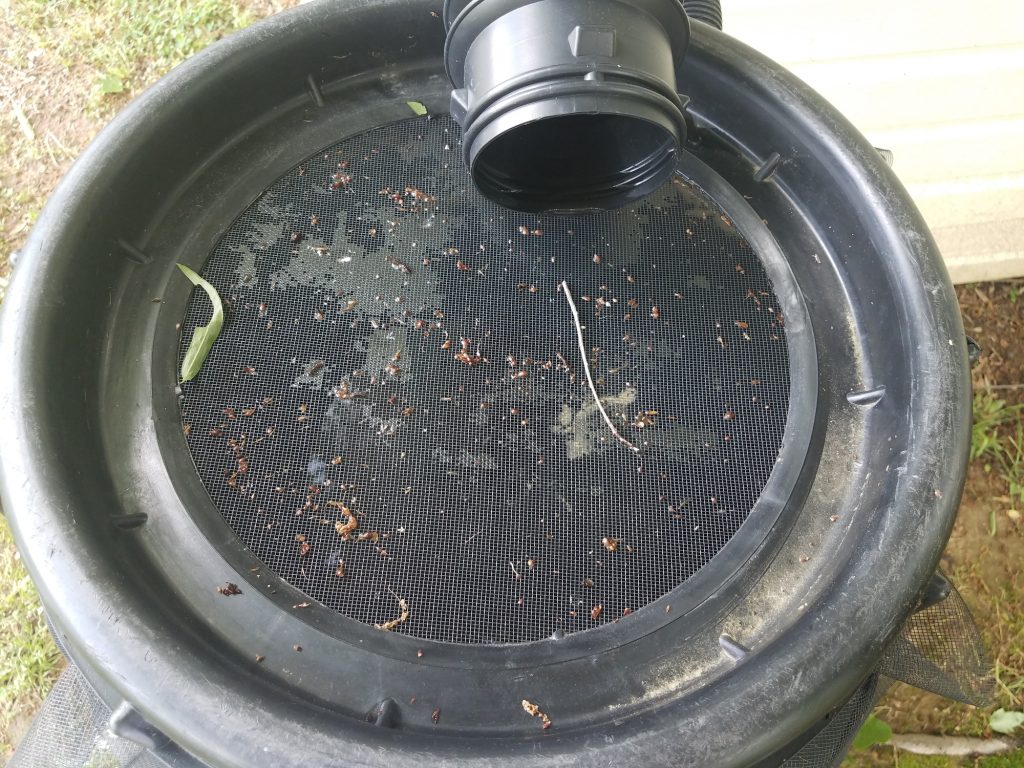
To keep your rain barrel free from mosquitos, add a mesh screen to any open areas on the barrel. Make sure that the screen is small enough, around 1/16-inch, so that mosquitos cannot slip though the mesh. Other ways to minimize the threat of mosquitos is to keep the barrel free of debris and organic matter, cleaning the inside periodically, and make sure all seals are tight. An insecticide that is safe for plants or adding a tablespoon of an eco-friendly dish soap or vegetable oil will prevent mosquitos.
During the winter when temperatures are below freezing, additional maintenance may be required. Repeated freeze/thaw cycles can damage your rain barrel, so consider disconnecting the downspout from the rain barrel or draining it and storing it upside down.
The Greene County Conservation District plans to hold rain barrel workshops again this summer. These workshops are open to all Greene County residents and are free to attend. Participants in the workshop will construct their own rain barrel from materials provided by the Conservation District. For more information or to register, call the Conservation District at 724-852-5278, or e-mail jzinn@co.greene.pa.us.
Rain Barrel Workshop to be Held in Waynesburg
The Greene County Conservation District and the Waynesburg Borough will hold the first of several rain barrel workshops on the evening of Thursday, April 29th.
 This one-hour workshop will start at 6:00 PM, is open to all Greene County residents and is free to attend. The workshop will be held at the Waynesburg Borough Maintenance Yard located on East First Street (Right around the corner from College Field). Social distancing guidelines will be observed for the safety of staff and workshop participants. Masks will be required while indoors.
Participants in the workshop will construct their own rain barrel from materials provided by the Conservation District. Registration is required. For more information or to register, call the Conservation District at 724-852-5278, or e-mail Jared Zinn at jzinn@co.greene.pa.us.
Financial and other support for this project is provided by the Pennsylvania Association of Conservation Districts, Inc. (PACD) through a grant from the Pennsylvania Department of Environmental Protection under Section 319 of the Clean Water Act, administered by the U.S. Environmental Protection Agency. For more information about PACD, visit www.pacd.org.