


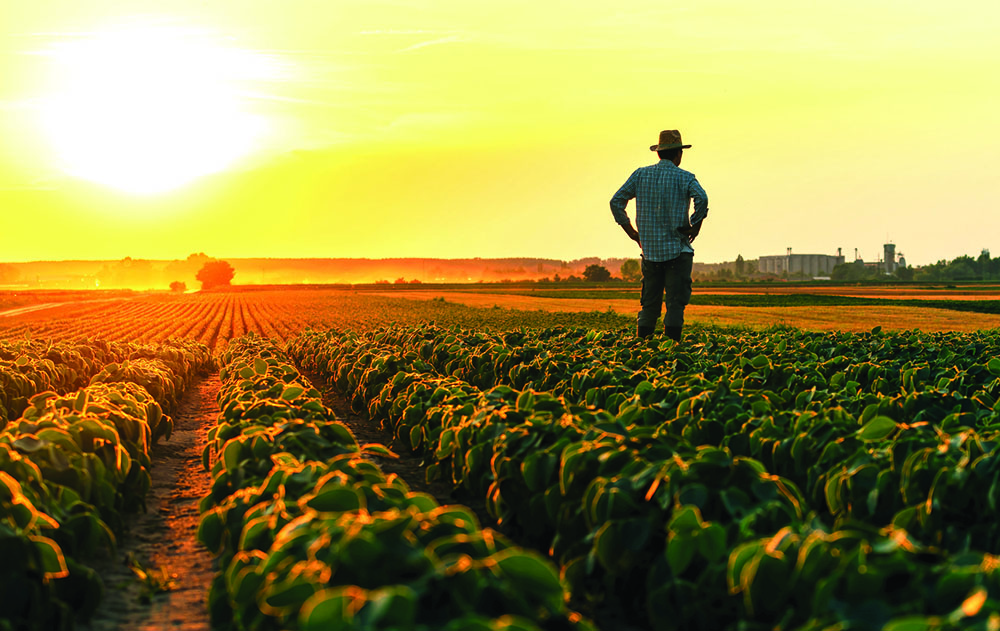
When I first moved to Eastern Kansas in 1979, I was at once struck by the richness of the soil and the vastness of the sky. Thunderheads forming and rolling in from the southwest, casting a moving line of shadows and rain over the black and green fields of winter wheat, was an impressive sight. I also loved seeing the roadside sign on my way to work depicting a bag of groceries and reading “one Kansas farmer feeds 155 people + you”.
We all owe a deep, daily vote of thanks to our farmers who feed us. We need to do what we can to make sure that our farmland continues to exist and stays fertile and healthy and that young people who want to choose farming have a path to making that dream a reality. After all, over half of all Pennsylvania farmers are age 55 or older! And in the 15-year period from 1982 to 1987 Pennsylvania lost 1.14 million acres or 1,800 square miles of fields and natural land to development.
This article addresses efforts to conserve our farmland. “Saving farmland for producing food, rather than losing it to warehouses and sprawl is an investment we can’t afford not to make.” Pennsylvania Agricultural Secretary Russell Reading said.
In Pennsylvania, farmers have three avenues to preserve their farmland. First, with the help of one of 68 different private, charitable land trusts (https://conservationtools.org/library_items/1434). Second, through the Agricultural Conservation Easement Purchase Program (https://conservationtools,org/library_items/1248). Third, through a combination of these private and public options. The Farmland Preservation Option for Homeowners article cited below details the pros and cons of these public and private options and gives examples.
Pennsylvania leads the nation in preserved farmland. It has preserved 6,482 farms amounting to 646,754 acres in 58 counties since voters overwhelmingly voted for the Farmland Preservation Program in 1988. Last December Governor Shapiro announced the plan to purchase the development rights to 2,842 acres on 31 farms in 13 counties to preserve them for farmland and protect them from future residential or commercial use.
The Pennsylvania Department of Agriculture has the Bureau of Farmland Preservation, which administers and distributes the program funds to the counties. A farmer’s first step in becoming enrolled in this government program is enrolling in the Agricultural Security Are, which protects the farm against ordinances and nuisance lawsuits that would interfere with normal farming activities. Then, the landowner can file an application to be included in the Farmland Preservation Program. If the application meets with approval and the farmer accepts, the program pays the farmer the difference between “fair market value” and the “agricultural value” in exchange for a permanent deed restriction preventing the use of the property for any use that negatively impacts its agricultural viability. The property owner keeps the title, can sell the property or pass it to heirs while still maintaining its agricultural use.
From milk to apples to mushrooms Pennsylvania is a primary producer of food for the state and the nation. Do what you can to show thanks to our farmers by frequenting the local farmers market, buying locally produced products when available in the grocery store, and in any way you can.
Graziani, M & Petrella, J. Understanding Agricultural Preservation. Penn State University extension, February 2, 2023.
Farm Flavor to Pennsylvania: Top Pennsylvania Agricultural Facts From the 2024 Census of Agriculture, May 28, 2024.

Loza, A Farmland Preservation Options for Landowners, WeConserve PA, 2023
Pennsylvania Invests $10.2 Million to Ensure 31 Farms in 13 Counties Stay Farms Forever, Bringing 2024 Total 167 New Farms and 13,847 Acres Preserved. Commonwealth of Pennsylvania, December 12, 2024.