


Elk farming has become a growing agricultural niche in Pennsylvania, offering both economic and ecological benefits. As consumer demand increases for specialty meats and alternative livestock products, more farmers in the Commonwealth are turning to elk as a profitable and sustainable enterprise. Pennsylvania’s natural landscape, with its rolling hills, forested areas, and moderate climate, provides ideal conditions for raising elk, making the state well-suited to support this unique agricultural venture.
Elk, also known as wapiti, are large members of the deer family. They are primarily raised for their lean, nutritious meat, which is lower in fat and cholesterol than beef and higher in protein. Elk meat, or venison, has gained popularity among health-conscious consumers and gourmet markets. In addition to meat, elk are also valued for antlers, which are harvested in the spring and used in traditional medicine, especially in Asian markets. Antlers, once fully grown and shed, are also sold as dog chews or decorative items.
The elk horn is the fastest growing bone there is…reaching full development within a ninety to a hundred and ten days (90-110), a truly amazing feat of nature. There are currently about a hundred (100) active elk farms in Pennsylvania. Elk horns generally sell for about twenty ($20) per pound.
Located in the Western end of the county, Paul Braddock, along with his son Brad, own and operate the Valley Elk Ranch, a 450-acre parcel of pristine wildlife habitat that houses Elk, deer, turkey, fox, and an abundance of other wildlife species. The Valley Elk Ranch is free roaming for all wildlife except for the Elk which are kept on a fenced-in 40-acre parcel of land.
With well maintained side-by-side trails that wind throughout the entire property, they are able to maintain, feed and patrol the entire ranch. Caring for the abundance of wildlife on the property is a daily routine and takes about two hours to complete. It encompasses feeding, checking fence, watering, vaccinating and a visual inspection of the animals to make sure all is well.
According to Paul, “managing and maintaining such a wonderful place is an expensive endeavor to say the least, and all you can do is “hope” to turn a profit at the end of the year”. There is feeding (approximately $40,000 yearly), fencing (over $20,000), fuel, barns and vaccinations…all necessary to ensure a healthy population of wildlife on a daily basis. Paul went on to say that “when you’re dealing with wild animals and the constant forces of nature…nothing is for certain”.
Ten years ago, the ranch was also well known as a deer farm. Unfortunately, a large tree falling on the fence enabled many of the animals to escape their sanctuary thus ending years of breeding and genetics completely lost with no chance of recovery…a devastating loss for the ranch. At this point the decision was made to concentrate mostly on the elk. The ranch is currently home to nine bulls and a herd of 15-20 cows and calves. Purchasing a bull would start at approximately $15,000, and they weigh between 800 -1,100 pounds.
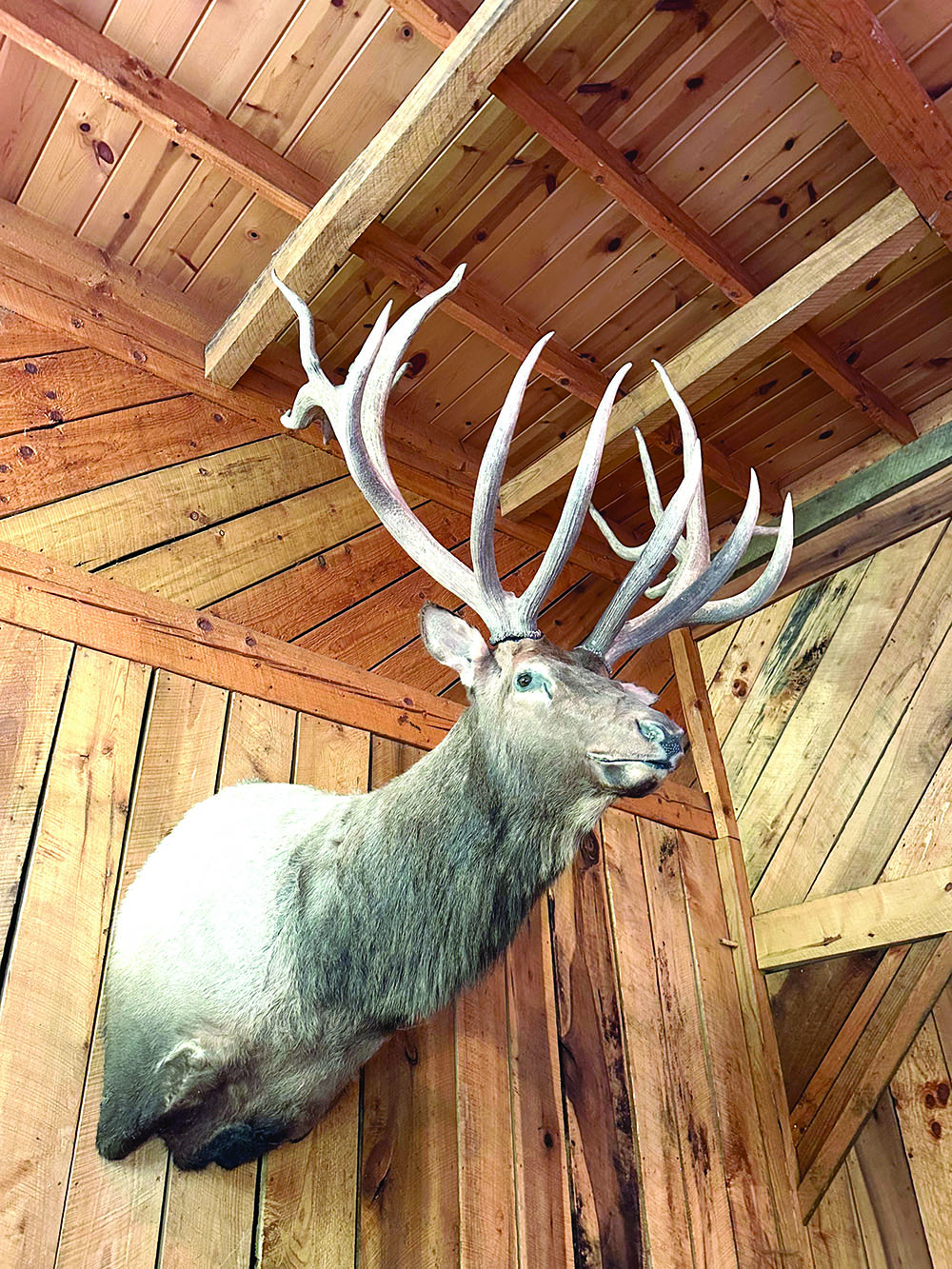
Two of the largest bulls to ever inhabit the ranch (pictured) both met their demise with very unfortunate circumstances. “Legend” fell to a competitor after being gored in the side while fighting for control of the herd. He was a massive bull with a towering rack that scored over 572 B&C points. Legend was one of the top five bulls in the country at the time of his death and was valued at between fifty and seventy thousand dollars.
Unfortunately, for the second bull, trying to cool off in the heat of summer cost him his life. He was lying in a stream and got his antlers caught in a willow tree and drowned. His score was also near 500 B&C points. Both of these magnificent animals are mounted and on display at the ranch.
Paul and Brad welcome anyone who wants to view the wildlife on their ranch. Paul asks that you remain respectful of his property when viewing the animals and be mindful of the fact that these are very large and wild animals. They should be viewed from a safe distance and you should never approach the animals or get near the fences and gates during certain times of the year (the rut).

Over the years, not all visitors to the ranch have had good intentions. Poaching is a major concern to the owners, and they have had to prosecute over 20 individuals for various violations.
Elk farming in Pennsylvania is regulated by the PDA, which classifies elk as “livestock.” This classification provides elk farmers with certain protections and access to state agricultural programs. They are subject to regular inspections and strict biosecurity protocols to ensure herd health.
In recent years, elk farming has gained momentum due to increased consumer interest. They require less intensive management than traditional livestock and are known for their hardiness and adaptability.
Despite its growth, elk farming in Pennsylvania faces challenges. Public concern about disease transmission between farmed elk and wild deer populations has prompted stricter oversight. In addition, the relatively high start-up costs can be a barrier for new entrants. However, those who invest wisely and follow best practices can tap into a niche market with high return potential.