


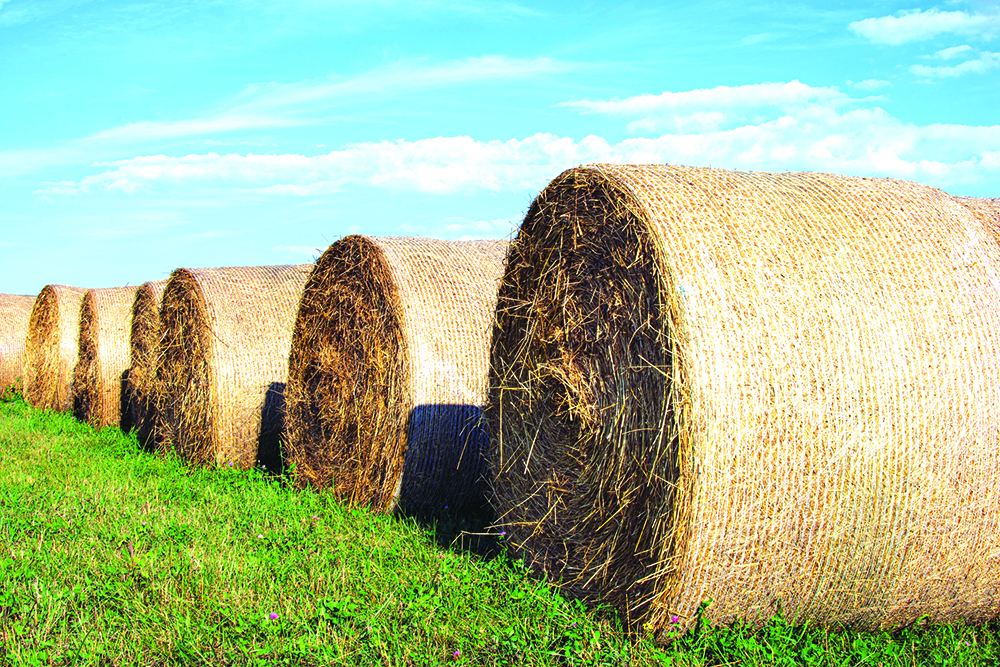
With the weather raising so much havoc lately…all the rain and then the heat, I thought it might be appropriate to look into the topic of “hay” in Greene County. Almost any store, restaurant or old bench that farmers gather at these days will include a conversation about “getting their hay up”…or their inability to get the hay up.
Recent weather trends in Greene County have made the harvesting of hay/haylage tough to say the very least. It’s important to note that haylage is harvested with a forage chopper and immediately put into a silo or ag bag and hay is dried before baling. Most of the hay produced in Greene County is “regular” hay, but there are also farms that raise alfalfa.
According to the Greene County Farm Bureau, the average farm size in Greene County is around 145 acres and hay is by far the dominant crop. Reports vary and it’s hard to determine the exact number of acres baled in Greene County. However, one thing that is certain is the number of acres being baled in Greene County has dropped significantly over the years.
One document indicated that in 2003 Greene County had around 36,600 acres of hay. However, a survey in 2022 production stated that only approximately 13,600 acres in Greene County was utilized…a decrease of around 23,000 acres in 19 years. This most likely reason is an aging population of farmers. Other factors include things such as property taxes, the impact of natural resource extraction, and decreasing commodity prices. However, while the number of farms in Greene County is declining, some farms are actually increasing in size.

Baling hay is a critical step in the agricultural cycle, particularly in livestock farming, where it serves as an essential feed source during times when fresh forage is unavailable. The process involves cutting, drying, raking, and compressing grasses or legumes into compact bales that are easy to handle, store, and transport. While it may seem straightforward, baling hay is both labor-intensive and dependent on timing and weather, making it a delicate balance of skill, equipment, and environmental awareness.
The first step in baling hay is mowing or cutting the hay when the grass or forage crop is at its peak nutritional value. This is usually just before the plants reach full maturity. Timing is crucial: cutting too early may reduce yield, while cutting too late can result in coarse, less nutritious hay. After mowing, the hay must be left in the field to dry, a stage known as curing. The moisture content of the hay at this point is critical — ideally around 15-20% — to prevent spoilage or spontaneous combustion once stored.
Once the hay has sufficiently dried, it is raked into windrows, which are long, narrow rows that make it easier for the baler to collect the material. Raking also helps turn the hay, ensuring even drying. After raking, a baler is used to gather the hay and compress it into bales. There are different types of balers — small square balers, large square balers, and round balers — each suited for different needs. Small square bales are easier to handle manually, while large bales require machinery but are more efficient for large-scale operations.
Round bales, which are common in many parts of the world, are particularly efficient for feeding large numbers of animals and are easier to store outdoors due to their shape and density. Square bales, on the other hand, are often preferred in smaller operations or for easier stacking in barns. In either case, once baled, the hay must be stored in a dry location or covered with tarps to prevent moisture damage.
The importance of baling hay extends beyond convenience. Properly baled and stored hay retains its nutritional value for months, making it a reliable source of feed during winter or drought conditions. Poorly baled hay, by contrast, can develop mold or become infested with pests, posing health risks to animals.
Modern technology has significantly improved the efficiency and precision of hay baling. Equipment now often includes moisture sensors, GPS systems, and automation features that reduce labor and improve bale quality. However, the core principles of timing, weather awareness, and proper handling remain as important as ever.
On a side note, the “Blessing of the Balers” is an annual event that originated in Greene County to help celebrate and bless the farmers and their equipment, particularly balers, in preparation for the hay season. This practice has since expanded to become a statewide celebration that is held at the State Capital. The event symbolizes a prayer for a safe and productive hay season. More information on this event is available on social media platforms.