


Baseball fans in Greene County have been subjected to yet another season of “professional” baseball by the team 50 miles to our north.
However, many years ago Waynesburg actually had its own professional team. In 1906, the town entered a team in the Pennsylvania, Ohio, and Maryland (P.O.M.) League. It was a Class D minor league with many of the clubs having major league affiliates.
In addition to the Narrow Gaugers (a reference to the W&W Railroad), there were six other PA teams representing Charleroi, Braddock (the Infants), McKeesport (the Tubers), Butler (the Bucks), and Uniontown (the Coal Barons). East Liverpool, Steubenville, and Piedmont were the Ohio teams, while Cumberland was the lone Maryland representative.
On opening day, the Gaugers were taken on pony carts in a parade from downtown to the newly renovated College Field on Southside. (That was also the first year the college used the field for football games.)
They swept an exhibition double header from the college team that day in front of “the entire town”. Later that season, a Fourth of July double header against eventual league champion Uniontown drew 2,500 fans.
However, despite the local support and the league’s biggest payroll, the team finished a disappointing sixth in the standings with a 48-50 record. Player/Coach Milt Montgomery had recruited a high-priced team that fell far short of expectations.
An article in the June 30 Washington Reporter stated, “The Greene County fans have all joined the knockers’ band and continually roast the team.” Some things never change.
The regular season was tumultuous, yet entertaining. Montgomery’s fiery temperament seems to have added to the drama. Early in the season, he was suspended for assaulting an umpire. The attack cost him three games and a ten-dollar fine.
Later in the season, he kicked his brother Ben off the team after they got into a fight with each other during a game. He was suspended again in August for attacking another umpire. In a nod to the style of journalism of that era, the Waynesburg Republican ran a story that said although Montgomery’s actions were “deplorable”, the umpire “got no more than he deserved.”
In September, he asked another umpire to replace a ball that was no longer fit for play. When the umpire disagreed, Montgomery hurled the ball into the Ten Mile. The umpire declared the game a forfeit as the ball sailed downstream, and another small riot ensued.
The rest of the roster was made up of some of the most talented players in county history. Elmer Cannon of Mt. Morris tossed a no-hitter against Charleroi on August 15. Cannon was famous in leagues around the area for two decades.
Ray (Lefty) Miller joined the club upon his graduation from Slippery Rock. He made his way through the minors and eventually reached the big leagues with the Pirates and Indians.
Former Waynesburg College star outfielder Jimmy Ganier was the squad’s best hitter. He received a gold watch after the season for being the team MVP. The local legend Joe “Hooker” Phillips joined the team mid-season after fulfilling a commitment to a AA affiliate in Ohio.
Other mid-season recruits included pitcher Casey Hageman. Hageman made an immediate impact. A Steubenville Herald-Star report described him as a “curly headed youth with a deceptive curveball that effectively stymied opposing batters”. He was credited with a 13–4 record in 19 appearances.
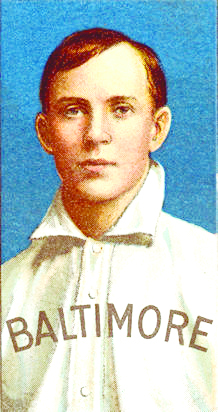
Another notable player on the roster was recent Geneva College graduate Rube Dessau, who also later advanced to the major leagues. He played one season with the Boston Doves (who became the Braves in 1912) and one season with the Brooklyn Superbas (who became the Trolley Dodgers in 1910).
Photographs from that season, featuring these players, are considered rare collectibles.
Unfortunately, the team’s troubles turned from humorous to tragic after the season. The franchise’s owner was Sherman Grim, the Waynesburg Borough treasurer and a prominent attorney. Because of the team’s expensive payroll, he lost $8,000 dollars on the season (That would be over $300,000 in today’s money). He hoped to make up the money the following year.
However, the Farmers and Drovers National Bank (located in what is now the borough office) failed, and he lost almost his entire fortune in the collapse. After he could not raise the 1907 entry fee for the league meeting, he was so distraught he drank a bottle of laudanum (alcohol and morphine) and slashed his wrists. His wife discovered his body upon returning home from church.
The Waynesburg team was replaced by Zanesville, but the league would only last another two years.
There was a time in this country when baseball did not need “promotional nights.” It was the number one sport by far and there were few other entertainment options competing for the customer’s dollar. Televised games were relatively few, and only away games were broadcast.
However, in the late 1960s, the gradual decline of baseball’s popularity accelerated. A 1972 Gallup Poll was the first to list football as America’s most popular sport. Baseball had held that title since the first poll in 1937. Since 1995, baseball has been virtually tied with basketball for second place on the list, with only 10% of the people naming it as their favorite sport.
Baseball has so many fundamental problems they are far too numerous to discuss in a short column. Unfortunately, whatever baseball’s problems are in general – the Pirates’ issues are tenfold.
Most of us must be lured to PNC Park by Skeins or McCutchen bobbleheads or fireworks nights. However, those inducements are wearing thin.
I thought it might be fun to take a look at the history and current state of promotional nights to gain a better understanding of the demise of the game I grew up loving.
The gradual decline of baseball started in the early 60s (when compared to the relevance of the game mid-century).
Bat Day was the original giveaway promotion to attract spectators to the ballpark, which quickly displaced discounted admission practices like Ladies Day as a technique to entice people to attend ball games.
The patron saint of Bat Day was Bill Veeck, the controversial owner who orchestrated many unusual promotional gimmicks to lure people into buying tickets to fill bad teams’empty ballparks.
The very first giveaway of free baseball bats occurred in St. Louis in 1952, at a Sunday doubleheader between the St. Louis Browns and the Philadelphia Athletics. A representative of a bankrupt bat manufacturer had approached Veeck trying to sell the company’s inventory. Veeck worked out a deal to pay eleven cents for every bat. The crowd of 15,000 that day was the largest of the season for the hapless Browns.
No other major-league club expressed interest in using such a “bush league” concept.

When Veeck purchased the White Sox, the bat giveaway resurfaced in 1962, when Coca-Cola agreed to subsidize the cost of the bats in exchange for advertising the company’s logo on the bats. The team made the giveaway an annual event and labeled the promotion as Bat Day. The club attracted a paid attendance of 30,755, about twice the typical crowd for a Sunday doubleheader at Comiskey Park.
The watershed year for Bat Day was 1964 when several American League clubs conducted the giveaway. The White Sox gave away 10,000 bats and attracted 36,313 people. After that, the Angels and Indians joined the party. Fans whose enthusiasm for the Indians had declined sharply in recent years suddenly stormed the gates. Those clubs were followed by the Kansas City Athletics, the Tigers, and the Red Sox.
The following year, all ten clubs in the American League scheduled Bat Days. The perspective on Bat Day completely changed when the defending champion New York Yankees held their first on Father’s Day that season. The crowd totaled 72,244, the largest to ever attend a major league game, including the World Series.
The formula seemed simple, add free bats – and nearly five times as many customers showed up. In 1966, the Yankees also added two other gift days for youngsters, Cap Day and Ball Day. Most American League clubs emulated the Yankees in holding all three promotions in 1966, as the National League clubs introduced Bat Day into their schedules.
This trio of promotional days lasted well into my youth. I can still remember those give aways, as well as the Green Weeny bonanza. (For people under the age of 65, don’t ask.)
Once the Super Bowl Era led to the rise of football dominance, baseball needed to become more and more creative (or desperate depending on your outlook).