


(Read Part I of this Article Here: https://staging.greenescenemagazine.com/towne-square-greene-countys-predicted-preventable-economic-crisis-part-i/)
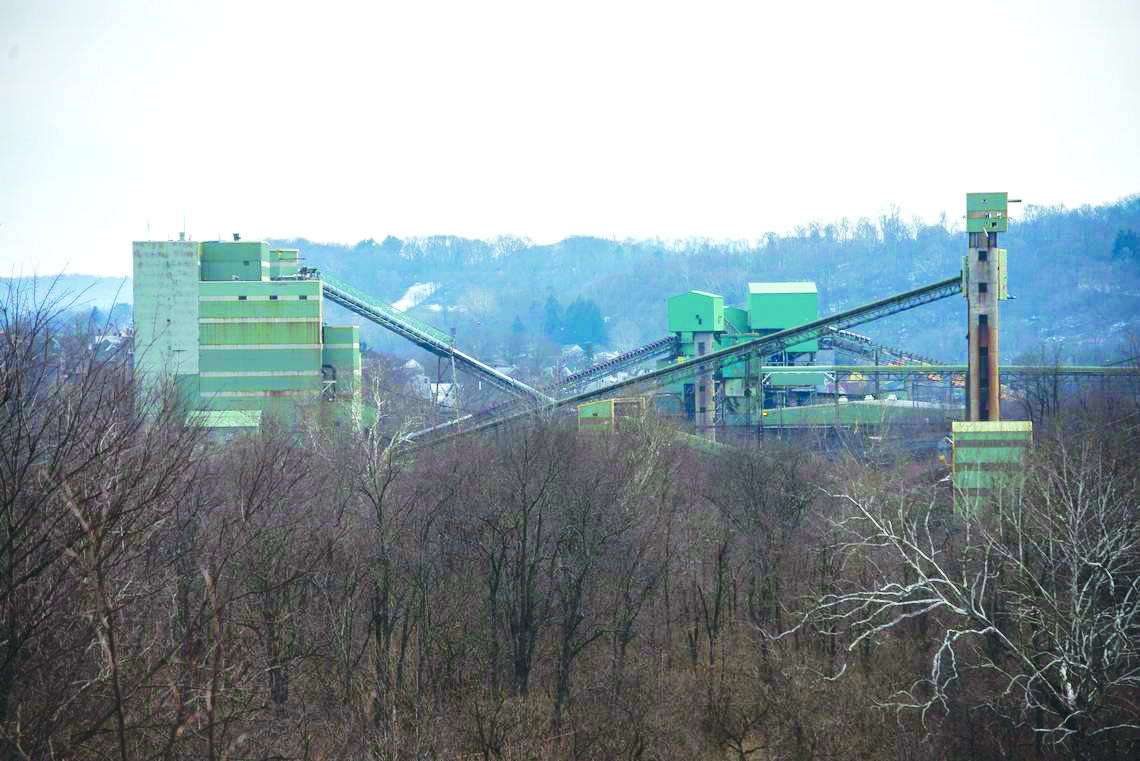
Last month, I discussed the number one issue preventing economic growth and increased economic diversity in Greene County as our property tax rates. For decades, successive elected leaders failed to respond to predicted changes in the coal industry, failed to increase economic diversity, and failed to invest in infrastructure for future growth. This predicament was not caused overnight, or over the last decade for that matter. The time to act was twenty to forty years ago. Now businesses, industry and residential developers find the tax burden too high to be competitive in their respective markets and seek opportunities elsewhere.
As previously mentioned, property taxes are the number one burden, but there are several other contributing components to factor into proposed solutions.
By 2020, having run out of money, county officials made drastic changes in fiscal policy. Significant cost saving measures, restructuring debt, and new policies for restricted funding facilitated county government general administration expenses to drop by 13.9% from 2019 to 2020. 2020 also marked the first time during the 6-year period that the fund balance grew, instead of declining. New policies and an influx of the American Rescue Plan funding permitted balancing the county budget in 2022 and 2023. This hasn’t “fixed” any of the tax revenue issues, it simply gave the county a little breathing room.
One of the most frequently mentioned barriers in Greene County is the lack of a public transportation system. Although there is a Share-Ride/Demand Response program for qualified riders, there is not a reliable mode of transportation for individuals requiring transportation to essential services including healthcare, work, grocery shopping, and other necessary travel. It is hoped a recent Rural County Mobility Platform (RAMP) pilot program will lead to a recommended public transportation solution for Greene County. Blueprints, Waynesburg University, and Greene County coordinated the test program developed by Carnegie Mellon University.
We also have a housing shortage. Although there are several planned developments, there are very few single-family houses being built. We desperately need smaller, patio type housing. This type of housing is more affordable for young families and will free up larger homes currently occupied by “empty nesters” who desire to downsize but stay in the area.
Our population continues to decline. Greene County’s population shrank 10.2% between 2010 and 2022. For comparison, the population of the U.S. grew 7.7% and the population of Pennsylvania grew 2.1% during the same period. The county’s largest decline was between 2021 and 2022 when the population dropped 1.7%. The trend continued in 2023 experiencing a 1.44% decrease in population. The 35-49 age group experienced a substantial decline.
Greene County also faces an aging population, with a higher percentage of residents aged 65 and over compared to the state average. The 65+ age group saw significant growth between 2010 and 2022, increasing by 22.8%.
Declining population and aging can affect the local economy, leading to decreased business activity and workforce shortages. An aging population can put increased strain on social services, healthcare systems and infrastructure to support the needs of older adults.
Because of property tax burdens, housing shortages, declining and aging population, sixty-two percent of our workforce commutes into Greene County every day. Each payday, significant amounts of money leave Greene County because individuals’ shop, eat, and invest (time, money, and leisure activities) where they live, not where they work.
Currently, Greene County is more than $100 million dollars short of taxable assets to obtain a balanced budget with traditional revenue. Remember the three taxable assets: land value, improvement value and mineral value? Land value changes very little over time. We know the assessment in mineral value (coal) is ever decreasing with each train load of coal produced and shipped out of the county. Increasing improvement value is the only variable that can be affected by increasing the physical footprint of businesses, industry and residential construction projects.
So, what does it take to increase improvement value by $100 million dollars? It would require construction equivalent to 32 Walmart stores or 504 metal prefab workstations or 76 Texas Roadhouse Restaurants or 400 single family homes. Of course, these are not reasonable solutions.
So, what’s the solution?
After a decade of studying this issue and four years of actively trying to solve this problem, I have come to the conclusion that the only viable solution, is a “White Knight.”
What or who is the “White Knight?” It’s a company or industry large enough in scale that the disproportional tax rates for Greene County are inconsequential. The value they see in the property available exceeds the disproportionate cost of doing business in Greene County. It may be a company that requires access to I-79, or our natural gas resources, or access to the Monongahela River for water or transportation. Proximity, energy resources or water availability may be well worth the cost of higher property taxation.

There are two geographic areas in Greene County the size required for this endeavor to have an investment significant enough to alter the economic decline of the county: the Greene County Airport and the Robena Coal Refuse Disposal Area.
The Greene County Airport is county owned and currently supports hobby aviation activities on a 3,500-foot asphalt runway. The airport property consists of more than 100 level, contiguous acres in very close proximity to I-79. All utilities are currently available at the site. The airport has been “for sale” for twenty-five years or more, but since 2020, more consulting has been done than ever before. As Reid Hoffman, co-founder of LinkedIn, said, “In crisis times, it’s actually not more difficult to motivate your staff, because everyone gets much more focused on how they control their own economic destiny.”
Secondly, the Robena Coal Refuse Disposal Area. The Pennsylvania Department of Community and Economic Development (DCED) has developed a “Playbook” published in January 2021 for the 1,000-acre site, offering potential redevelopment strategies and highlighting its strengths, including its location on the Monongahela River, access to rail and roadways, and potential for energy-related industries. The playbook provides market information and detailed data to help interested parties understand the site’s potential and facilitate due diligence. Business or industry development of this tract aims to attract investment and promote economic diversification in the region.
The only viable solution I see is business or industry site development on a scale Greene County has never seen before. Time is not on our side. Solutions to problems must be reasonable and feasible to even begin the rest of the analysis. It is certainly reasonable that a company or industry finds the need for either of these described properties. Feasibility would be analyzed through planning and due diligence, but either property offers valuable opportunities to the right partner.
Will this be quick? No! The scale of this investment requires a series of events that would include finding the buyer, initial planning, due diligence, permitting, building out the infrastructure, building improvements, and then the implementation of the operational plans. Agreement to production can realistically take 4-7 years. Not to mention, Greene County has a 5 year modified bases tax abatement program in which full taxes on assessed value are not realized until five years after the completion of construction.
We know how we got in this predicament, what will our future be?











Comments 1