

For over a century, the Greene County and Jacktown Fairs have stood as living testaments to tradition, hard work, and community spirit. But behind the livestock pens, colorful ribbons, and funnel cakes lies something even more meaningful: the families who have sustained these fairs through multiple generations. From raising animals to leading local 4-H clubs, these families have turned the fairs into more than just summer events. They’ve made them pillars of legacy and learning.
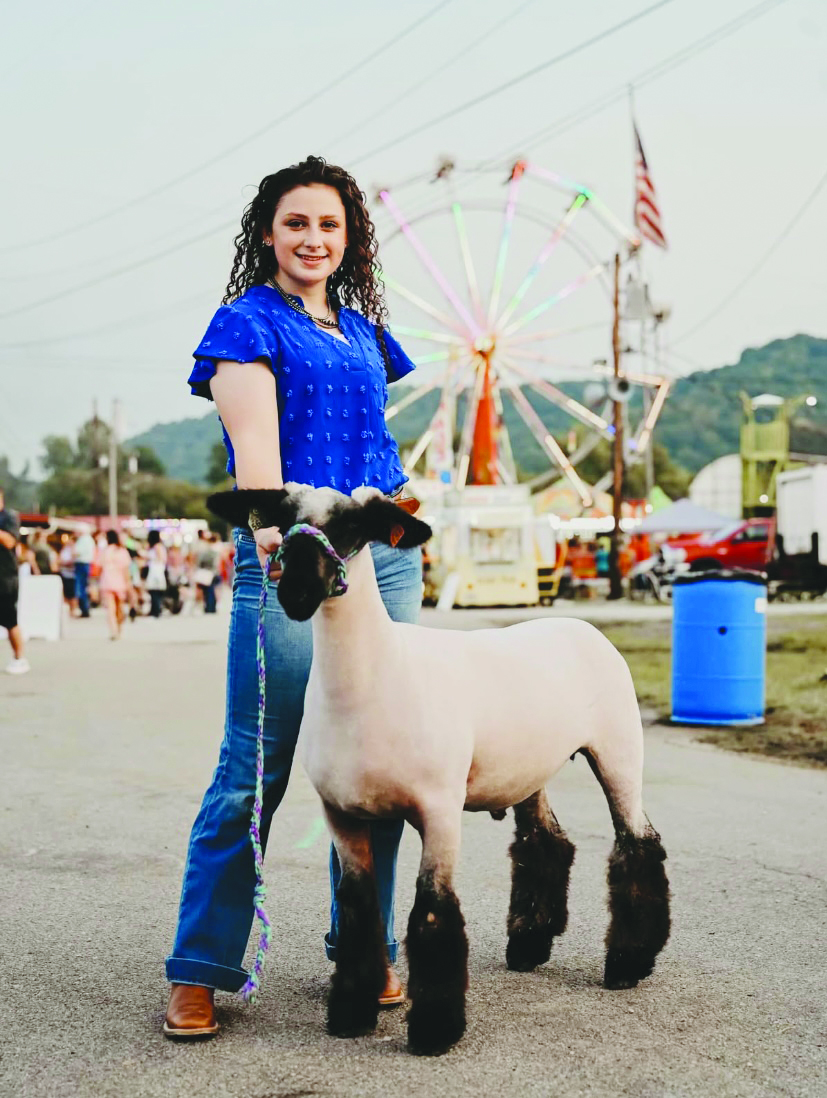
The Simpson family’s involvement in the fairs spans decades, defined by a remarkable sense of continuity and commitment. After taking a 20-year break from showing livestock himself, Wes Simpson returned to the fairgrounds, not for his own sake, but to guide his children. His children, now aged 14 and 15, are actively showing animals, and in doing so, they’re following in his footsteps while forging paths of their own.
What makes Mr. Simpson most proud isn’t just the blue ribbons or successful showings. It’s witnessing how much his kids are learning through the process. “The thing that I’d say I’m most proud of, is the fact that my kids now get to learn from this experience the same way that I did when I was their age,” he said. For the Simpson family, showing livestock is not just about competition; it’s about education, responsibility, and personal growth.
He also pointed out how the process has evolved. The way animals are now fitted and presented has become more complex and refined, reflecting the increasing sophistication of modern agricultural practices. Yet, even amid these changes, the core values remain the same: dedication, care, and community.
Looking to the future, Mr. Simpson hopes that his children will continue this legacy. His vision is clear: to see the next generation not just participate, but fully engage in the entire process, from birth to sale. The biggest challenge? “Enough time,” he admitted. It is a struggle any parent balancing work, family, and farm life can understand.
For the Cowell family, involvement in the fair began generations ago and has adapted with the times. Becky Cowell grew up showing cattle and sheep, just like her siblings. Now, her son is continuing the tradition, showing in his fifth year of 4-H.
As trends in agriculture and livestock have changed, so too has the Cowell family’s focus. Still deeply involved in raising and showing cattle, the family now emphasizes the importance of Jackpot shows. Jackpot shows, once a novelty, have become popular and widely attended, drawing the Cowells into new arenas of competition.
Prioritizing animal husbandry over sports, the Cowells have shifted their energy and resources to continue making livestock a central focus of their family life. Becky is a prominent 4-H leader in Greene County, having served in that role for over 10 years. Through her work, she maintains a deep connection with other local families and youth, helping foster the same opportunities she once enjoyed.
Her advice to others? Simple but powerful: “You get out of your project what you put in. The more work you put in, the more it shows. Enjoy it; it’s the labor of love.” That work ethic, passed down through generations, is what keeps the Cowell name a respected one on the fairgrounds.
With roots deep in farming culture, the Behm family represents the third generation of agricultural involvement, not just in practice, but in leadership. While farming isn’t the family’s primary occupation today, it remains a central part of their way of life. Their involvement with FFA, 4-H, and other organizations stretches across decades and state lines.
Jim Behm’s father, Bud, was a founding member of a local pig club and served as a 4-H advisor, while his children followed in his footsteps. With a passion for FFA, Jim was able to obtain his American Degree, which is the highest degree one can earn in the FFA. His brother went on to earn his State Degree. Even now, they run a cow-calf operation, reinforcing their commitment to hands-on agricultural education.
The Behms have also adapted to changing times. “4-H changed its marketing style since I was in the program,” Jim noted, referencing the shift from local, in-person exchanges to online systems. While this may have created challenges, it has also expanded opportunities and introduced efficiencies.
Still, they believe that what matters most hasn’t changed. “Success is completing a good and well-run project,” Jim said. For them, the true reward of 4-H is the character it builds: the responsibility, work ethic, and teamwork it cultivates in young people. These are lifelong lessons that extend far beyond the fairgrounds.
The family continues to evolve. For the future, they hope to incorporate more technology and business management into both crops and livestock. With more targeted breeding, specific styles, and clearer budgets and plans, they believe the next generation of fairgoers can blend tradition with innovation for even greater success.
And while they admire many aspects of the fair community, the Behms expressed a special respect for the Simpson family’s tight-knit approach—a reminder that at its core, the fair is a family affair.
Finally, few families can match the longevity and consistency of the Mooney family’s involvement in the fairs. Since the mid-1880s, the Mooney’s have played an active role in both the Greene County and Jacktown Fairs. Spanning generations, including Helen, Bob, their children, and grandchildren, the family has been a fixture at the fairgrounds for well over a century.

Change has touched even a family as rooted in tradition as the Mooneys. Over the years, fair infrastructure has evolved; barns that used to be separate have now been unified, and various rules have shifted. “You kinda have to roll with the punches,” Bob Mooney said, reflecting a flexible and positive attitude that has no doubt helped them stay engaged through decades of transformation.
Currently, three generations of the Mooney family are involved, ensuring that knowledge, skills, and stories are passed down naturally. One especially noteworthy accomplishment: Bob’s father used to hold the record for the longest continuous attendance at the Jacktown Fair. That kind of dedication speaks volumes about the role the fair plays in their lives.
Their advice for other families is heartfelt: “The fair is the most important thing—it brings people together with people they otherwise wouldn’t see.” In a world where time is short and distractions are many, the fair offers an irreplaceable chance to connect across generations, across families, and across a community.
A Shared Legacy, A Shared Future
While each of these families – the Simpsons, Cowells, Behms, and Mooneys -has its own unique story, what unites them is a common belief in the value of the fair. They see it as more than just an event: it’s an institution that teaches responsibility, builds character, and strengthens community ties.
These families have weathered changing trends, new technologies, and evolving rules. They’ve embraced goats when cattle waned in popularity, adapted to digital record-keeping and marketing, and learned to balance tradition with progress. And most importantly, they’ve passed on their passion to their children and grandchildren, ensuring that the spirit of the Greene County and Jacktown Fairs will endure.
From early mornings in the barn to late nights in the show ring, the commitment these families demonstrate is nothing short of inspiring. Their stories remind us that while ribbons may fade and trophies gather dust, the values learned and the memories made at the fair last forever.
As we look ahead, it’s clear that the future of these fairs lies not in flashy events or bigger prizes, but in the quiet, steady hands of those who continue to return year after year. The families who call the fair home will always be its heartbeat.