


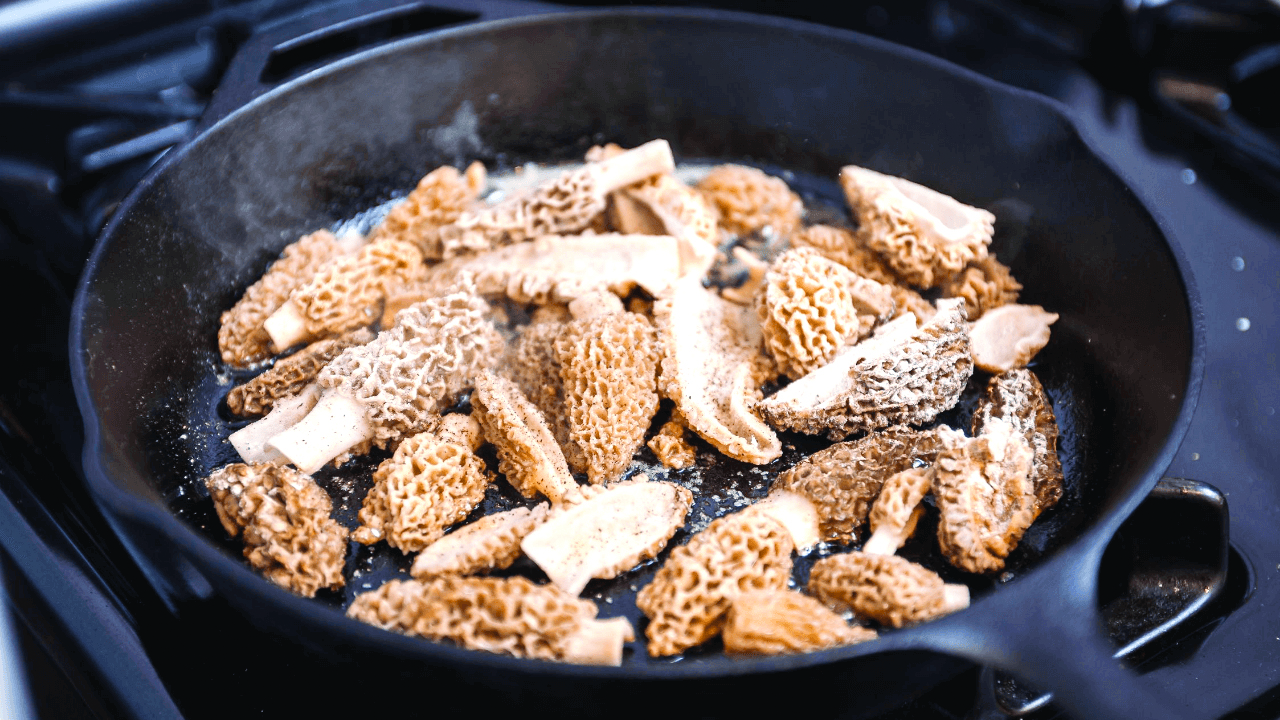
An old timer once told me you only need three things to find morels…a walking stick, a good pair of boots and a keen eye. I am by no means an expert at mushroom hunting, but I have learned a few things along the way. Over the years, I have added to his list…things like luck, patience and experience are also necessary to be successful in finding the elusive fungi. This activity often coincides with turkey hunting for me and is a rewarding participation trophy when the turkeys are not cooperating.
Morchella, the true morels, with a distinctive honeycomb appearance of their caps, are highly prized delicacies for their flavorful taste and nutritional value (manganese, phosphorus, zinc and vitamin D). Locating morels is not easy, and once found, the plot locations are often a closely guarded secret to allow for future gatherings (much like ginseng plots).
Morels are almost universally associated with spring and can be found in many habitats. Morels are more likely to fruit during a period of increasing heat following a chilly period, a preference which is credited for their abundance in areas with cold winters (like ours).
For beginners, take the time to educate yourself on the different morel fungi. When gathering morels for the table, care must be taken to distinguish them from the poisonous “false morels” and other morel lookalikes. All wild morels should be thoroughly cleaned (soaked in saltwater) and cooked before eating.

The “mushroom season” generally runs from late March to early May depending on the weather. To find morel mushrooms, focus on woodlands or woody edges, and especially around dead or dying trees like elms, ashes, poplars, and apple. In addition, disturbed areas like burn sites or logged areas are often productive. Drainage ditches, which tend to be wet and get sunlight, are ideal places to look for morels. South facing slopes in the early season are also good since this is where the ground warms up first. The best time to hunt for morels is after a good spring rain when soil temperatures are in the 50’s or 60’s, and ideally, when the nights are above 50 degrees. These conditions trigger their growth and emergence.
Finding morels can be a fun event for the entire family. However, everyone should use caution when reaching in and around logs and tree trunks. The warm weather brings out wild mushrooms, but snakes are stirring too. Copperheads frequent the same areas in which mushrooms thrive. Stay alert and you should be fine.
So, get out there with your family this spring and find some mushrooms. You don’t have to be an expert to find wild mushrooms…but you do need to put in the effort. You will be glad you did. A simple google search of ‘morel recipe’s’ will reveal several options to highlight the earthy, nutty flavor of these popular wild seasonal mushrooms.